Bipolar Disorder: Causes, Symptoms and Treatment
Bipolar Disorder Definition: What Is Bipolar Disorder?
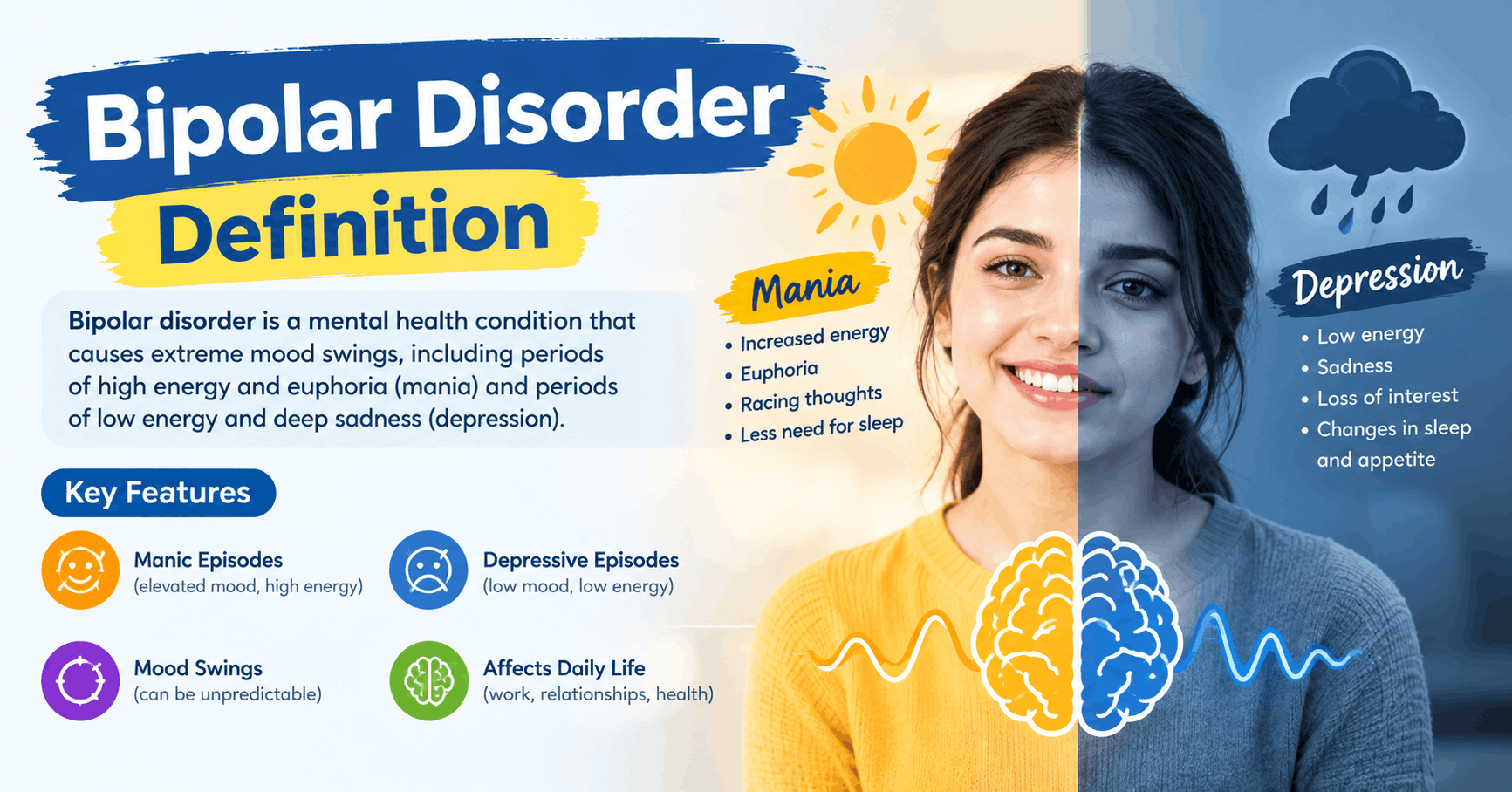
Bipolar disorder — formerly known as manic depression or manic-depressive illness — is a lifelong mental health condition that causes extreme, noticeable shifts in a person’s mood, energy, activity levels, and ability to think clearly. People with bipolar disorder cycle between emotional highs, known as mania or hypomania, and emotional lows, known as depression.
Unlike the everyday ups and downs most people experience, bipolar mood episodes are intense, last for days to months, and are severe enough to disrupt sleep, relationships, work, and daily functioning. Between episodes, many people experience long stretches of a stable, balanced mood — a state clinicians call euthymia.
Bipolar disorder is not a personality quirk or a sign of being “overly emotional.” It is a diagnosable, biologically rooted brain condition that usually requires lifelong management, similar to how conditions like diabetes or hypertension require ongoing care.
How Common Is Bipolar Disorder? (Statistics)
Bipolar disorder affects millions of people around the world:
- Globally, an estimated 36 million people — about 0.4% of the world’s population — were living with bipolar disorder in 2023, according to the World Health Organization (WHO).
- In the United States, more than 3.3 million adults (1.7%) experience bipolar disorder in a given year, and an estimated 4.4% of U.S. adults will experience it at some point in their lives.
- The condition affects men and women in roughly equal numbers, although women tend to be diagnosed more frequently and may experience faster mood cycling and longer depressive periods.
- Symptoms typically first appear in the teenage years or early twenties, although bipolar disorder can begin at any age.
- On average, people living with bipolar disorder die 13 years earlier than the general population, largely due to co-occurring physical health conditions and elevated suicide risk — underscoring why early diagnosis and consistent treatment matter.
Types of Bipolar Disorder
Bipolar disorder isn’t a single condition — it exists on a spectrum with several recognized subtypes. The table below breaks down the main differences.
| Type | Key Features | Duration Requirement |
|---|---|---|
| Bipolar I Disorder | At least one full manic episode, which may occur before or after episodes of hypomania or major depression. Mania may be severe enough to require hospitalization and can include psychosis (a break from reality). | Manic episode lasts at least 7 days (or any length if hospitalization is required) |
| Bipolar II Disorder | At least one major depressive episode and at least one hypomanic episode — but never a full manic episode. Not a “milder” version of Bipolar I; depressive periods are often longer and more frequent. | Hypomanic episode lasts at least 4 days |
| Cyclothymic Disorder (Cyclothymia) | Numerous periods of hypomanic symptoms and depressive symptoms that are less severe than full episodes, with few symptom-free periods. | At least 2 years in adults (1 year in children/teens) |
| Other Specified/Unspecified Bipolar Disorder | Mood episodes caused by substances, alcohol, or an underlying medical condition (such as Cushing’s disease, multiple sclerosis, or stroke), or patterns that don’t fit the categories above. | Varies |
Rapid cycling is not a separate diagnosis but a course specifier — it describes anyone with bipolar disorder who experiences four or more mood episodes within a 12-month period. Triggers for rapid cycling can include substance use, disrupted sleep patterns, certain antidepressants, and high stress.
Symptoms of Bipolar Disorder
Bipolar disorder symptoms fall into two broad categories — manic/hypomanic symptoms and depressive symptoms — plus mixed presentations where both occur together.
Signs and Symptoms of a Manic Episode
During mania, a person may experience three or more of the following, often lasting a week or more:
- Feeling unusually energetic, euphoric, or “on top of the world”
- Decreased need for sleep without feeling tired
- Talking unusually fast or feeling pressured to keep talking
- Racing thoughts or jumping rapidly between topics
- Inflated self-esteem or grandiosity (an exaggerated sense of importance or abilities)
- Being easily distracted
- Impulsive or risky behavior — overspending, risky sexual activity, reckless driving, or poor business decisions
- Irritability, agitation, or sudden anger
- In severe cases, hallucinations or delusions (psychosis)
Left untreated, a manic episode can last up to three months and may require hospital-level care to keep the person safe.
Hypomania: How Is It Different From Mania?
Hypomania involves the same core symptoms as mania but in a milder, shorter form. A person in a hypomanic episode may:
- Feel very good, productive, or energized
- Still function at work or in social settings
- Not personally notice a problem, even though others around them do
Because hypomania can feel pleasant or productive, many people don’t seek help during this phase — but a depressive episode often follows. Clinically, hypomania requires at least four consecutive days of symptoms without the severe impairment, hospitalization, or psychotic features seen in full mania.
Signs and Symptoms of a Depressive Episode
A major depressive episode involves five or more of the following symptoms, present for most of the day, nearly every day, for at least two weeks:
- Persistent sadness, emptiness, or hopelessness
- Loss of interest or pleasure in activities once enjoyed
- Significant, unintentional weight loss or weight gain
- Sleeping too much or too little
- Restlessness or noticeably slowed movement and speech
- Fatigue or loss of energy
- Feelings of worthlessness or excessive, inappropriate guilt
- Difficulty concentrating or making decisions
- Recurrent thoughts of death or suicide
In children and teens, depression may look more like irritability, anger, or hostility rather than obvious sadness.
Mixed Episodes
A mixed episode occurs when symptoms of mania and depression happen at the same time — for example, feeling hopeless and low while also being restless, agitated, and full of energy.
Other Symptom Patterns
Bipolar disorder symptoms may also present with additional features, including:
- Anxious distress — symptoms of fear and anxiety alongside mood episodes
- Melancholic features — profound sadness and an inability to feel pleasure
- Psychotic features — a disconnect between thoughts/emotions and reality
- Seasonal patterns — symptoms that shift with the seasons
- Peripartum onset — symptoms that emerge during or shortly after pregnancy
What Causes Bipolar Disorder?
Researchers haven’t identified one single cause of bipolar disorder. Instead, it’s understood to result from a combination of overlapping factors:
- Genetics: Bipolar disorder tends to run in families. Having a first-degree relative (a parent or sibling) with the condition significantly raises the risk, although no single “bipolar gene” has been identified — many gene variations are thought to contribute small amounts of risk.
- Brain structure and chemistry: Imaging studies show subtle physical differences in the brains of people with bipolar disorder, along with differences in neurotransmitters such as dopamine and serotonin, which help regulate mood, motivation, and energy.
- Epigenetics: Life experiences, stress, and illness can change how genes are expressed, even without altering the underlying DNA — a growing area of bipolar disorder research.
- Environmental and life-event triggers: High-stress events — bereavement, divorce, job loss, or trauma — can trigger a first episode or worsen existing symptoms.
Risk Factors for Bipolar Disorder
You may be at higher risk of developing bipolar disorder if you have:
- A first-degree relative with bipolar disorder
- A history of childhood trauma, including emotional abuse or neglect
- Experienced major life stressors, such as loss, divorce, or unemployment
- A history of drug or alcohol misuse
Because there is no single identifiable cause, there is currently no proven way to prevent bipolar disorder from developing in the first place — but early treatment can prevent it from worsening.
Complications of Untreated Bipolar Disorder
Without consistent treatment, bipolar disorder can lead to serious consequences across every area of life, including:
- Increased risk of suicide or self-harm
- Substance and alcohol misuse
- Financial and legal problems (often linked to impulsive decisions made during mania)
- Damaged relationships and social isolation
- Poor performance at work or school
- Accidents or injuries sustained during manic or mixed episodes
Conditions That Commonly Occur Alongside Bipolar Disorder
Bipolar disorder frequently co-occurs with other conditions, which can complicate diagnosis and treatment:
- Anxiety disorders
- Eating disorders, including binge eating disorder
- Attention-deficit/hyperactivity disorder (ADHD)
- Post-traumatic stress disorder (PTSD)
- Substance use disorders
- Borderline personality traits or disorder
- Physical health conditions such as heart disease, thyroid problems, migraines, and obesity
How Is Bipolar Disorder Diagnosed?
There is no blood test, brain scan, or single questionnaire that can diagnose bipolar disorder on its own. Instead, diagnosis relies on a thorough clinical evaluation, typically involving:
- A detailed history of mood episodes, including times when the person felt unusually “up” or “down”
- Input from loved ones, since family and friends often notice mood changes the person themselves may not recognize
- Screening questionnaires completed in a provider’s office
- Mood and sleep logs kept over time to track patterns between visits
- Blood or urine tests to rule out other medical causes of mood changes, such as thyroid dysfunction or substance use
Because symptoms often overlap with other mental health conditions — such as major depressive disorder, ADHD, or borderline personality disorder — an accurate diagnosis can take time.
Bipolar Disorder Treatment Options
Although there is no cure, bipolar disorder is highly manageable with the right combination of treatments. Most treatment plans combine medication, psychotherapy, and lifestyle strategies.
Medications for Bipolar Disorder
- Mood stabilizers — such as lithium, valproate/valproic acid, and carbamazepine — are considered a first-line treatment for managing acute mania and preventing relapse. Lithium requires regular blood testing to monitor levels and protect kidney and thyroid function.
- Atypical antipsychotics — including quetiapine, olanzapine, lurasidone, and cariprazine — are used to manage manic, mixed, or depressive episodes.
- Antidepressants paired with a mood stabilizer — antidepressants are rarely prescribed alone in bipolar disorder, since they can trigger a manic episode; they are typically combined with a mood stabilizer or antipsychotic.
Important safety notes: Valproate should be avoided by girls and women who are pregnant, breastfeeding, or of childbearing potential due to risks to a developing baby. Anyone taking lithium should watch for signs of lithium toxicity — including confusion, severe vomiting, muscle twitching, or vision changes — and seek medical help immediately if these occur.
Medication side effects can include drowsiness, tremors, and weight gain, which is why ongoing communication with a prescriber is essential — most people need to try more than one medication before finding what works best.
Psychotherapy for Bipolar Disorder
Talk therapy is a core part of long-term management:
- Cognitive Behavioral Therapy (CBT): Helps identify and reframe unhelpful thought patterns that influence mood and behavior.
- Interpersonal and Social Rhythm Therapy (IPSRT): Focuses on stabilizing daily routines — sleep, meals, activity — since disrupted rhythms are closely linked to mood episodes.
- Family-Focused Therapy: Involves loved ones in psychoeducation and communication skills, improving support at home.
- Dialectical Behavior Therapy (DBT): Builds emotion regulation and distress tolerance skills.
Other Medical Treatments
When medication and therapy aren’t enough on their own, providers may recommend:
- Electroconvulsive Therapy (ECT): A controlled electrical current induces a brief, therapeutic seizure under general anesthesia.
- Transcranial Magnetic Stimulation (TMS): Uses magnetic pulses to stimulate mood-related brain regions; it’s non-invasive, requires no anesthesia, and is used mainly for depressive episodes that haven’t responded to medication.
- Ketamine Therapy: Low-dose, medically supervised ketamine (often via IV) may provide rapid, short-term relief from severe depression or suicidal thoughts.
Lifestyle Strategies and Support
Alongside medical treatment, lifestyle habits play a major role in staying stable:
- Keeping a consistent sleep schedule — sleep disruption is one of the most common triggers for mood episodes
- Avoiding alcohol and recreational drugs, which can worsen symptoms and interfere with medication
- Taking medication exactly as prescribed, even when feeling well, since stopping abruptly can trigger withdrawal or relapse
- Recognizing personal early warning signs and having a plan to contact a provider quickly
- Building a support system through family psychoeducation, peer support groups, and workplace accommodations
Can Bipolar Disorder Be Prevented?
Because the exact cause of bipolar disorder isn’t known, there’s no guaranteed way to prevent it from developing. However, once diagnosed, people can take concrete steps to prevent minor mood shifts from escalating into full episodes:
- Watch for early warning signs and involve family or friends in monitoring them
- Prioritize consistent, sufficient sleep
- Avoid alcohol and drug use
- Stay consistent with prescribed medication and regular provider check-ins
Outlook: Living With Bipolar Disorder
Bipolar disorder is a serious, lifelong condition — but a well-managed one. With an effective treatment plan, most people are able to significantly reduce the frequency and severity of mood episodes, maintain stable relationships, pursue meaningful careers, and lead fulfilling lives.
Recovery isn’t always linear, and symptoms may recur even with treatment. Staying engaged with a care team, adjusting treatment when needed, and leaning on support systems all contribute to long-term stability. The goal of treatment isn’t to eliminate the condition — since there’s currently no cure — but to keep symptoms manageable so they don’t take over daily life.
When to Seek Emergency Help
Thoughts of suicide and self-harm are common among people with bipolar disorder, and mania itself can increase suicide risk. Seek help immediately if you or someone you know experiences:
- Thoughts of death or suicide
- Plans or intentions to harm oneself or others
- Hallucinations or delusions
In the United States, call or text 988 to reach the 988 Suicide & Crisis Lifeline, available 24/7 and free and confidential (a Spanish-language line is available at 1-888-628-9454). In an immediate emergency, call 911 or go to the nearest emergency room. Outside the U.S., contact your local emergency number or a local crisis line.
Frequently Asked Questions About Bipolar Disorder
1. What is the main cause of bipolar disorder?
There isn’t one single cause. Bipolar disorder is believed to result from a mix of genetics, brain chemistry and structure, and environmental triggers such as major stress or trauma.
2. What is the difference between Bipolar I and Bipolar II?
Bipolar I requires at least one full manic episode, which can be severe enough to require hospitalization. Bipolar II involves hypomania (a milder form of mania) along with at least one major depressive episode, but never a full manic episode. Bipolar II is not a “lighter” version of Bipolar I — people with Bipolar II often experience longer depressive periods.
3. Can bipolar disorder be cured?
No, bipolar disorder currently has no cure — it’s a lifelong condition. However, it is highly treatable. With the right combination of medication, therapy, and lifestyle management, most people can significantly reduce the frequency and severity of episodes and lead stable, productive lives.
4. At what age does bipolar disorder usually start?
Symptoms most commonly first appear during the teenage years or early twenties, although the condition can technically develop at any age. Diagnosis can take time, since early symptoms are often mistaken for typical mood swings, stress, or other conditions.
5. Is bipolar disorder the same as having frequent mood swings?
No. Everyone experiences ups and downs, but bipolar disorder involves distinct episodes of mania/hypomania and depression that last for days, weeks, or months, are a clear departure from a person’s usual behavior, and significantly disrupt daily functioning — not simply feeling moody for a few hours.