
You can find your skin type at home in about an hour: wash your face, wait 60 minutes with nothing on your skin, then look at how it feels and looks. That is the bare-face test. A blotting-paper test gives you a second check. No quiz, no product and no appointment needed.
Try it: use our interactive Skin Type Finder — answer 5 quick questions and get your result.
Try it: use our interactive Lip Colour Finder — answer 3 quick questions and get 3 natural lip shades that suit you.
Knowing your type matters because the same product can help one person and irritate another. Once you know your type, you can choose a routine for it — our simple 3-step skincare routine by skin type is the place to start after this test.
The bare-face test, step by step
- Wash your face with a gentle cleanser and lukewarm water. Pat dry with a clean towel — do not rub.
- Put nothing on your skin. No moisturizer, no serum, no sunscreen for this hour.
- Wait 60 minutes. Do not touch your face. Go and do something else.
- Look in the mirror and feel your skin. Check your forehead, nose, cheeks and chin separately.
What you see — and what it means
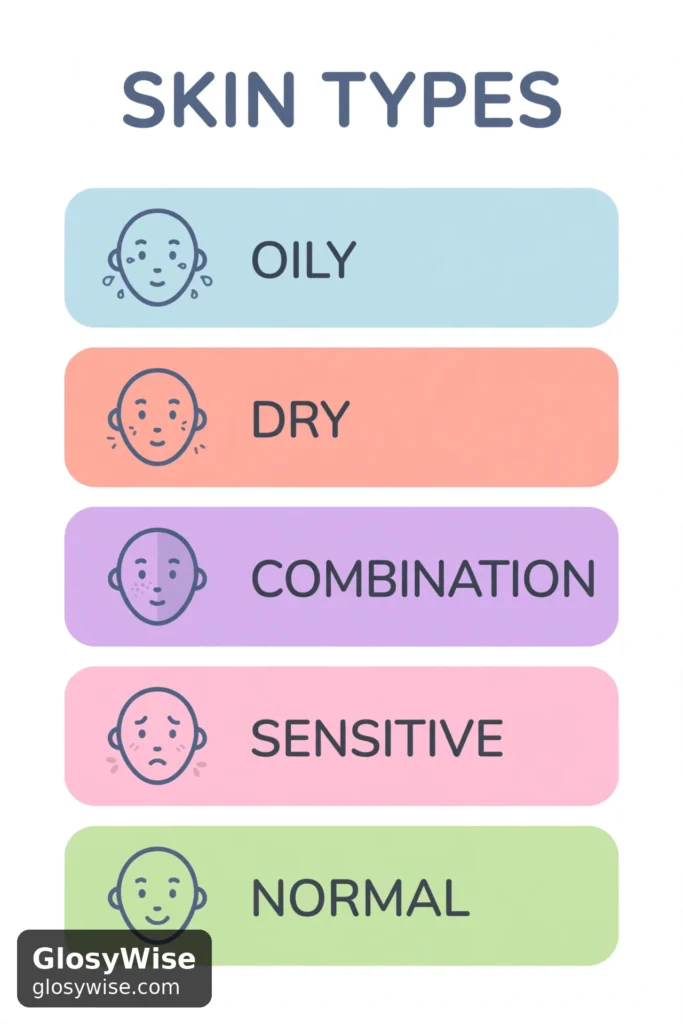
| What you notice after 1 hour | Likely skin type |
|---|---|
| Shiny all over, especially forehead and nose | Oily |
| Tight, rough or flaky, no shine | Dry |
| Shiny on forehead/nose/chin, normal or dry on cheeks | Combination |
| Comfortable, balanced, no tightness or shine | Normal |
| Red, itchy or stinging, reacts easily | Sensitive |
Sensitive skin is different from the others: it is about how your skin reacts, not how oily or dry it is. You can be oily and sensitive, or dry and sensitive. Note both parts — for example, “combination and sensitive” — and choose gentle products first.
The blotting-paper test
This is your second check, and it takes two minutes.
- Wait until the bare-face test is done, or do it on a separate clean-skin morning.
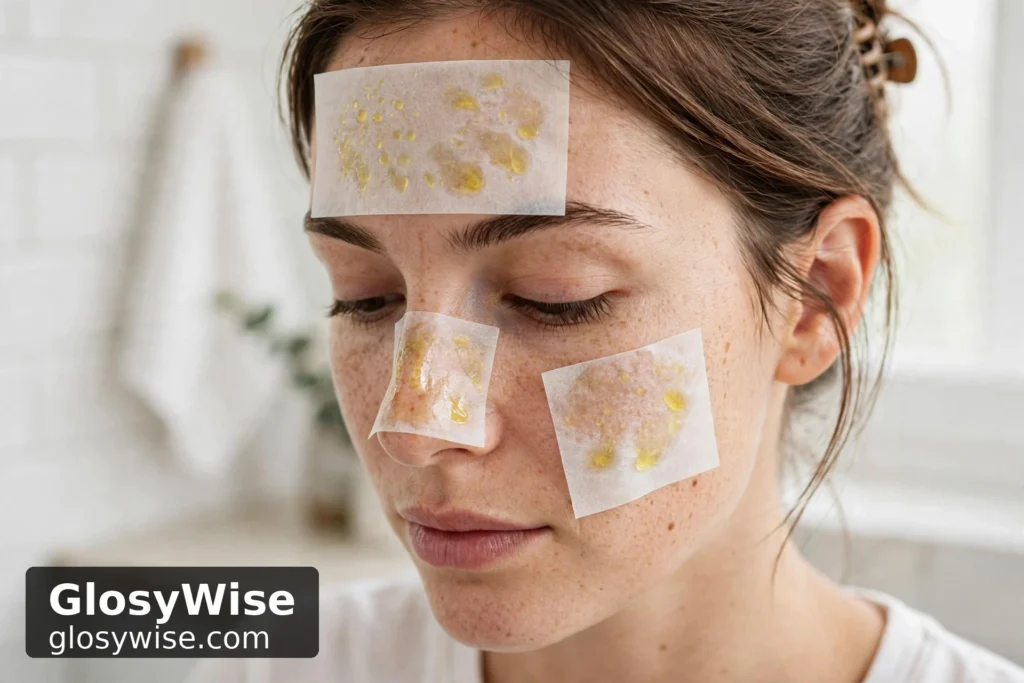
- Press a piece of blotting paper — or a clean tissue — gently on your forehead, then your nose, then each cheek.
- Hold each piece up to the light.
If the paper from your forehead and nose is covered in oil but the cheek paper is clean, that points to combination skin. Oil on every piece points to oily skin. Almost no oil anywhere points to dry or normal skin. If the two tests disagree, trust the bare-face test and repeat both tests on another day — skin changes with weather, sleep and hormones.
5 mistakes that give the wrong result
- Testing with products on. Moisturizer or sunscreen hides your real skin. Test on bare skin only.
- Testing after exercise or sun. Sweat and heat make skin look oily and red. Test on a normal, calm morning.
- Testing too soon after washing. Give it the full hour. Skin feels tight for the first few minutes after washing, whatever your type.
- Confusing dehydration with dryness. Dehydrated skin feels tight but can still look shiny, and it is usually temporary — caused by weather, harsh products or not drinking enough water. Dry skin lacks oil all the time. If your skin is tight and shiny, try a gentler cleanser and more hydration for two weeks, then test again.
- Testing once and deciding forever. Skin type can change with seasons, age, climate and products. Re-check every few months, and always re-check if your skin suddenly changes.
Can your skin type change?
Yes. Oily skin in summer can feel normal in winter. Skin often becomes drier with age. Moving to a dry or humid climate, starting a new product, or a change in hormones can all shift how your skin behaves. That is normal — it is why re-testing matters more than getting one “correct” label.
What to do next for each type
- Oily: use a gentle foaming cleanser, a light moisturizer and sunscreen. Do not strip your skin with harsh products — that usually makes oil worse.
- Dry: use a gentle creamy cleanser, a richer moisturizer and sunscreen. Avoid long hot showers on your face.
- Combination: treat zones differently if you need to — lighter products on the T-zone, richer ones on dry cheeks.
- Sensitive: keep it simple, patch-test every new product, and introduce one product at a time.
- Normal: keep the basics consistent — cleanse, moisturize, protect — and add treatments only if you have a specific concern.
The full routine for each type, with product guidance, is in our simple 3-step skincare routine for beginners by skin type. This article is the diagnostic step; that one is the routine. Do not try to build both at once.
For general skin-care basics from dermatologists, see the American Academy of Dermatology: https://www.aad.org/public/everyday-care/skin-care-basics/care
Conclusion
Finding your skin type at home is simple: wash, wait an hour, look — then confirm with blotting paper. Write down your result, note whether your skin is also sensitive, and choose products for that type. Re-test when the season changes. Good skincare starts with knowing your own skin, not with buying more products.
Try it: use our interactive Skin Type Finder — answer 5 quick questions and get your result.
Try it: use our interactive Lip Colour Finder — answer 3 quick questions and get 3 natural lip shades that suit you.
Wash your face, leave it bare for 60 minutes, then look and feel: shiny all over means oily, tight and flaky means dry, shiny only on the T-zone means combination, comfortable means normal, and red or stinging means sensitive.
Wash with a gentle cleanser, pat dry, put nothing on your skin, wait 60 minutes, then observe your forehead, nose, cheeks and chin. It shows how your skin behaves with no products on it.
Yes. Combination describes oil pattern; sensitive describes reaction. You can be both. Choose gentle products and introduce them one at a time.
Every few months, and whenever the season changes, you move climate, or your skin suddenly behaves differently. Skin type is not fixed for life.
No. Dehydrated skin lacks water and feels tight but can still look shiny; it is often temporary. Dry skin lacks oil all the time. A gentler cleanser and more hydration usually help dehydrated skin within a couple of weeks.
[…] you start anything new, we recommend you find your skin type first: see our guide on how to find your skin type at home. That helps you choose a strength and a routine that fits your […]
[…] your skin type and work out whether it is oily, dry, combination or sensitive: see our guide on how to find your skin type at home. What works for one type does not work for […]