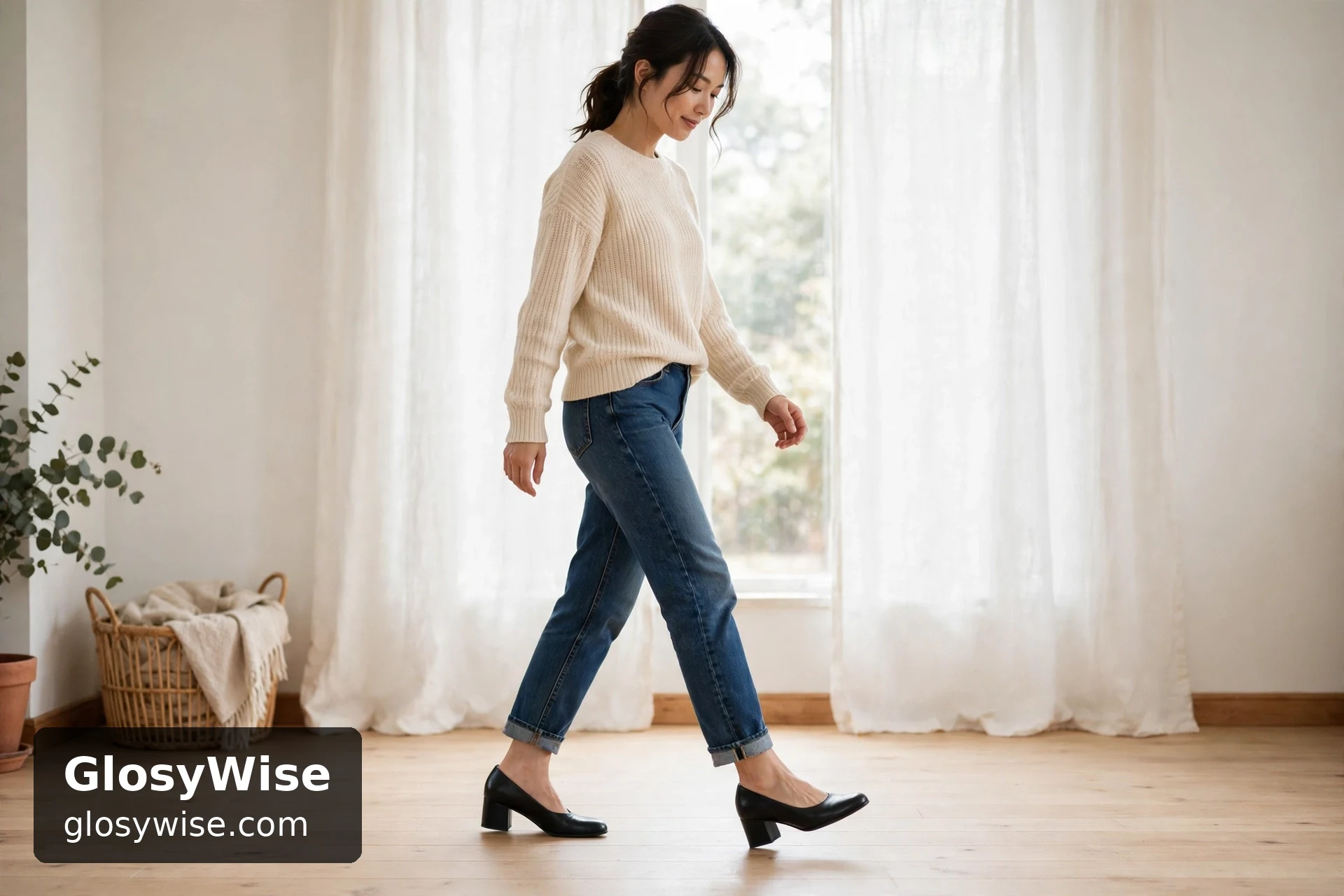
You can learn to walk in heels in about a week of short practice. The secret is simple: start low, learn the heel-to-toe walk at home, and build up your height slowly. Most beginners feel comfortable in their first pair within a week.
Start with the right heel
Your first pair matters more than anything else in this guide. The wrong first pair — too high, too thin, too tight — will make walking feel impossible. The right first pair makes it feel easy.
Follow the height ladder

Think of heel height as a ladder you climb one rung at a time:
- 1.5 inches (about 4 cm) — kitten heels. Your starting point. A kitten heel lifts you just enough to feel like a heel, while your foot stays almost flat.
- 2 inches (about 5 cm) — low block heels. Once a kitten heel feels natural, move here. Two inches is the easiest beginner heel height for most people.
- 3 inches (about 7.5 cm) — the next step. Only move here when a two-inch heel feels easy. A three-inch heel changes your balance more, so take your time.
Begin under 5 cm and stay there until walking feels natural.
Kitten and block heels first, stilettos last
A wide heel gives you more ground to stand on, so your balance is steadier. That is why beginners should start with block heels, kitten heels or wedges.
Stilettos come last: a thin stiletto concentrates all your weight on a tiny point, so it is the hardest heel to walk in.
Heels also change how your whole outfit looks. A low block heel adds a little lift without changing your proportions much, which is why it is such a good first heel. Once you are comfortable, you can start thinking about how different heel heights work with different outfits — for example, how a heel changes the line of an oversized blazer outfit. For now, choose comfort.
Get the size right first
Before you practise a single step, make sure your heels fit. A wrong size is the most common reason heels hurt, and no amount of practice fixes a shoe that does not fit.
Try on both feet — most people have one foot slightly bigger than the other, and you should fit the bigger one. Walk around the shop in them, not just stand still. Leave a little toe room: your toes should not be squeezed against the front, and your heel should not slip out of the back.
If you are unsure of your size in a new brand, our Shoe Size Converter helps you match your size across UK, US and EU sizing before you buy.
The walk, step by step
Here is the heel-to-toe walk, broken into steps you can practise at home.
1. Heel down first, then toe. Put your heel down first, then roll forward onto the ball of your foot and push off with your toes. Landing flat or toe-first is what makes you wobble.
2. Take small steps. Short, neat steps keep your balance. Big strides throw your weight forward and make your ankles wobble. Aim for steps about half the size you take in trainers.
3. Keep your knees soft. Do not lock your knees straight. A soft, slightly bent knee absorbs each step and keeps you steady.
4. Look ahead, not down. Looking at your feet is the beginner’s instinct, and it is the worst thing you can do. When you look down, your head goes forward, your weight shifts, and your balance goes with it. Look ahead and trust your feet.
5. Practise on carpet, then hard floor, then outside. Start on carpet at home — it gives you grip and a soft landing. When carpet feels easy, move to a hard floor like wood or tile. Only go outside once hard floor feels natural, and start on smooth, flat pavement, not grass or cobbles.
Practise in short sessions of ten to fifteen minutes, a few times a day. Stand in front of a mirror for the first few sessions so you can check your posture: shoulders back, chin up, steps small.
Build up slowly
Once the walk feels steady at home, build up — slowly. Start with 30 minutes at home for a few days: wear your heels while you cook, tidy up, or get ready for the day. Everyday movement is the best practice, because it teaches your feet to walk in heels without thinking about it. When 30 minutes feels easy, try an hour.
Then take a short outing: a quick trip to the shops or a coffee with a friend. Keep the first outing under an hour.
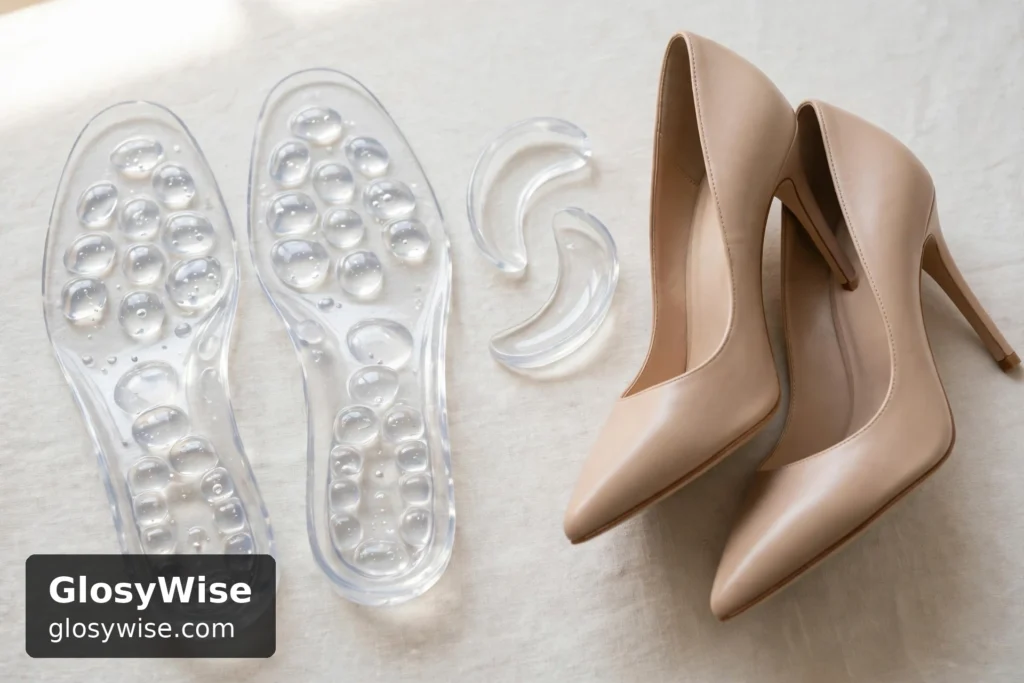
Two small additions help as you build up: gel insoles cushion the ball of your foot, which takes most of the pressure in heels, and heel grips stop your heel slipping out of the back. Both are cheap and fit inside almost any heel.
All-day tips
Sooner or later you will want to wear heels for a full day — a wedding, a work event, a night out.
Carry flats for the walk home. A pair of foldable flats in your bag means you can walk to and from the event in comfort and save your heels for the event itself.
Take sitting breaks. Sit down when you can — at dinner, on the train, between events — and give your feet a rest. Even five minutes makes the next hour easier.
Choose the right heel for the outfit. A block heel works with almost everything and is the safest choice for a long day. Some trousers work beautifully with heels too: wide-leg pants pair well with a heel because it lifts the hem off the floor.
Break new heels in at home first. Never wear a brand-new pair to a long event the first time. Wear them around the house for a few days first, so the shoe softens to your foot.
5 mistakes beginners make
1. Starting in stilettos. A tall, thin stiletto as a first heel is like learning to drive in a racing car. Start low and wide.
2. Buying the wrong size. Heels that are too small pinch your toes; heels that are too big slip off your heel. Get the size right first, and try both feet before you buy.
3. Taking big steps. Big strides throw your balance off. Small steps are steadier, look more graceful, and get you there just as quickly.
4. Looking at your feet. It feels safer, but it makes your balance worse. Keep your chin up and your eyes ahead.
5. Wearing new heels to a long event the first time. A wedding, a party or a full work day is not the place to test a new pair. Break them in at home first.
For more beginner heel tips, ShoeZone’s guide to the best heels for all occasions covers height, fit and practice: https://www.shoezone.com/Blog/best-heels-for-all-occasions
FAQs
Start under 5 cm — about two inches or less. A kitten heel (around 1.5 inches) or a low block heel (around 2 inches) is the best first heel. Once that feels natural, move up one step at a time.
Put your heel down first, then roll onto the ball of your foot and push off with your toes. Take small steps, keep your knees soft, and look ahead instead of down at your feet. Practise on carpet first, then hard floor, then outside.
Yes, much easier. A block heel is wide, so it spreads your weight over a bigger area and keeps your ankle steady. A stiletto is thin, so all your weight sits on a tiny point. Start with block or kitten heels, and move to stilettos only when the walk feels natural.
Most beginners feel comfortable in a low heel within a week of short daily practice. Feeling natural in a higher heel takes a few weeks of regular wear. Practise a little every day rather than in one long session.
Start with the right size and a low, wide heel. Add gel insoles to cushion the ball of your foot and heel grips to stop slipping. Break new heels in at home first. On long days, carry flats and take sitting breaks when you can.
Leave a Reply