
Styling a shalwar kameez well comes down to three things: the right cut for your height, the right fabric for the season, and the right shoes for the occasion. Get those three right and the rest falls into place.
A shalwar kameez suits almost every body type and dresses up or down with small changes. Beginners usually go wrong in three places: the wrong size, a heavy fabric in summer, or the wrong shoes.
Fit first: the three things to check
Fit matters more than price or brand: a plain shalwar kameez that fits well beats an expensive one that hangs wrong. Check three things before you buy.
First, kurta length: it should end around mid-thigh to just above the knee. Any longer and it shortens your legs; any shorter and it looks like a shirt. Stand straight and the hem should sit near your fingertips or a little below.
Second, the shoulder seam: it should sit right on the edge of your shoulder, not drooping down your arm or pulled onto your collarbone. This one detail decides whether the outfit looks neat or sloppy.
Third, sleeve length: the sleeve should end at your wrist bone, where a watch sits. Sleeves that cover your hands look careless; ones that stop halfway up your forearm look outgrown.
The shalwar should be comfortable at the waist and fall in a clean, straight line, without pulling when you sit or bunching under the kurta. A drawstring waist is normal — keep it at your natural waist, not sagging on your hips.
What changes for your build
The same three checks apply to everyone, with a few tweaks per build.
- Short build: keep the kurta short, around mid-thigh — long kurtas cut your legs short. Our petite capsule wardrobe shows how proportion works for shorter frames.
- Tall build: a slightly longer kurta, just above the knee, works well. Avoid kurtas that end too high — they look like they shrank in the wash.
- Slim build: a regular or slightly fitted cut looks best — very loose fabric hangs off you. A waistcoat adds shape.
- Broad build: choose a relaxed, straight cut so the fabric skims rather than clings. Darker colours and plain fabrics are the easiest start.
Try it on, sit down, and walk a few steps. If it pulls or feels tight anywhere, it is the wrong size — whatever the label says.
Fabric by season: the simple rule
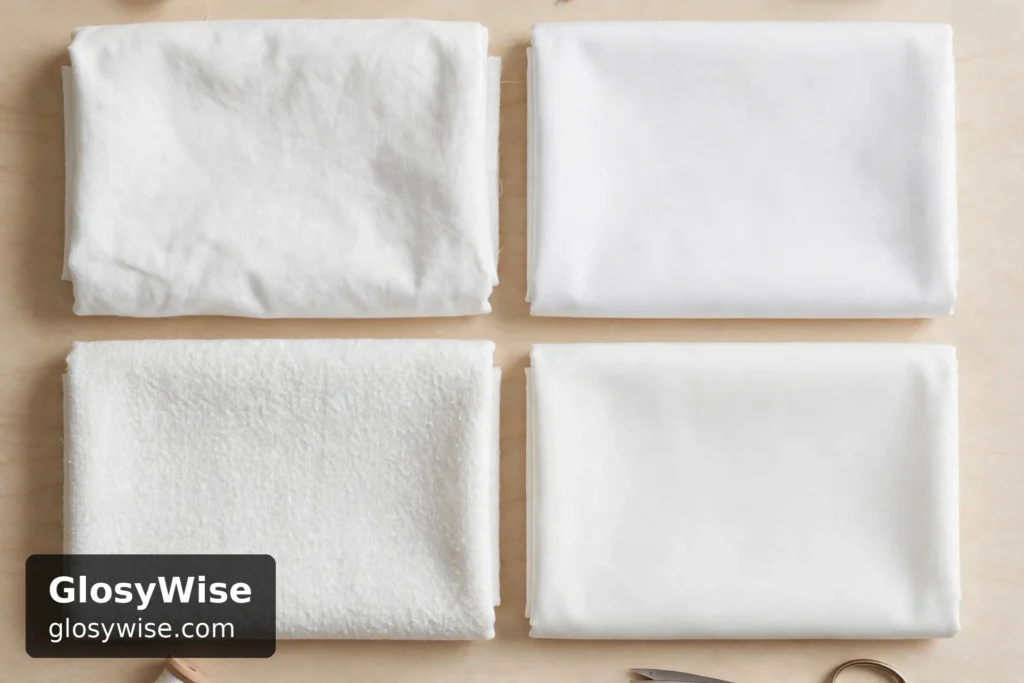
Light and breathable for summer, heavier and warmer for winter.
For summer, choose cotton or lawn. Cotton is the safe default — it breathes, is easy to wash, and suits everyday wear. Lawn is lighter still and feels cool on the skin, a good choice for the hottest days and for Eid in summer. Pick a fabric that feels soft and light, not stiff or shiny.
For winter, choose karandi or wash-and-wear. Karandi is thicker and warmer and holds its shape well, good for formal occasions in cold weather. Wash-and-wear is the practical option: it needs little ironing and works through autumn and winter without feeling heavy.
Hold the fabric up to the light: see-through means summer; thick and heavy means winter. Wash a new fabric once first — some shrink or soften after the first wash.
Three occasions, three looks
1. Everyday casual
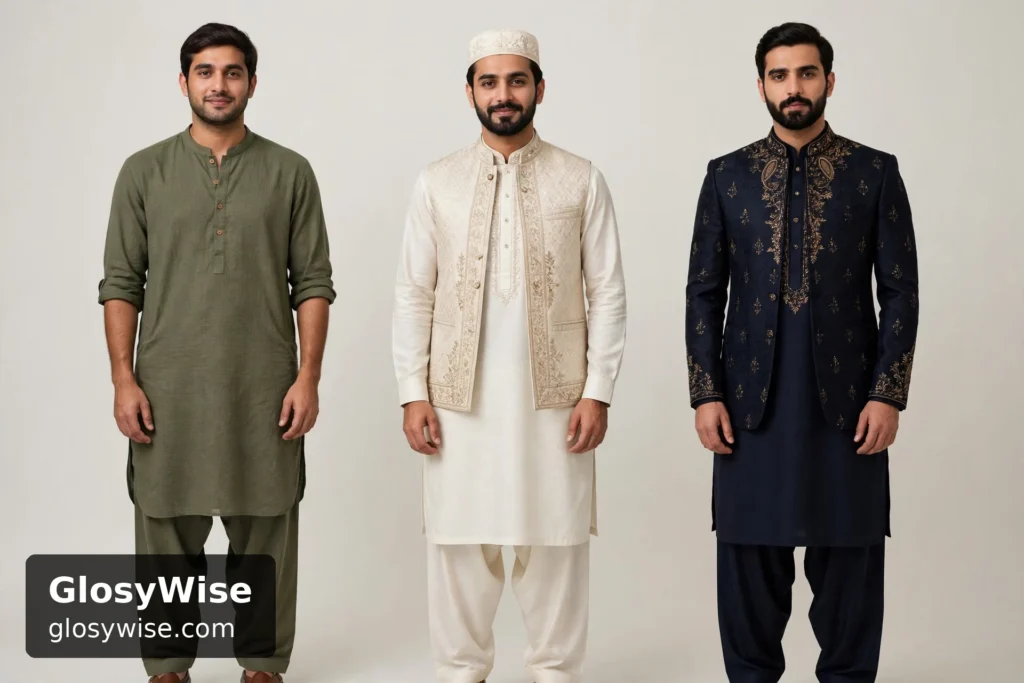
A plain kurta in white, off-white, or a soft pastel, with the shalwar in the same colour — a matching set looks cleaner than mixing shades. Wear sandals or a Peshawari chappal, and skip the waistcoat. That is the look for daily wear, family lunches, Friday prayers, and errands. In warm weather, choose cotton or lawn.
2. Eid
Step it up a little. Choose a light colour — white, cream, sky blue, or a soft pastel — in lawn or fine cotton, and add a waistcoat in a matching or slightly darker shade. A plain waistcoat is safest; a lightly patterned one works if the kurta is plain. Wear loafers instead of sandals: a clean pair makes the outfit look finished. Add a watch and you are done — fresh and put-together, not overdressed. Our guide to easy ways to look put-together every day shows how the same small details work for everyday outfits.
3. Wedding
Go darker or richer: navy, deep green, maroon, charcoal, or black. A plain dark kurta with a waistcoat looks sharp and formal; for an evening event, add an embroidered kurta or a sherwani-style layer instead. Wear polished formal shoes, not sandals, keep the colours close together, and add one small touch: a pocket square, a good watch, or a brooch.
Shoes that go with it
Peshawari chappal: the classic everyday choice — comfortable, traditional, right for daily wear and daytime events. Choose good-quality leather in brown or black.
Loafers: the step up from chappal, for Eid, gatherings, and dinners. Brown loafers go with light colours; black loafers with dark colours.
Khussa: the traditional embroidered shoe, best for festive occasions — Eid, weddings, celebrations. Save it for special days, not errands.
Formal shoes: polished leather shoes for weddings and formal events, the only right choice with a waistcoat or sherwani-style layer. Black with dark colours, brown with lighter ones.
Colours for beginners: start with four
Start with four that work for almost every occasion: white, black, navy, and one pastel.
White is the most versatile — it works in summer, for Eid, and with any waistcoat. Black is the formal option, best for evenings and weddings. Navy sits between the two: smart enough for formal events, calm enough for everyday wear. One pastel — sky blue, light grey, or soft mint — gives you a fresh option for daytime.
Your kurta and shalwar should be the same colour, your waistcoat the same colour or one shade darker, and your shoes close, not an exact match. Matching everything exactly looks forced.
Build a small wardrobe, not a big one
Two or three good sets cover most needs: one white for everyday and Eid, one dark for formal events, one pastel for summer. Buy one set first and learn what fit and fabric you like. Our Men’s Capsule Checklist tool helps you plan a small wardrobe that covers everyday wear, formal events, and everything in between.
5 mistakes beginners make
1. A kurta that is too long. One that reaches your knees shortens your legs and looks untidy. Mid-thigh to just above the knee is right for most men.
2. The wrong fabric for the weather. Heavy karandi in summer leaves you hot; thin lawn in winter leaves you cold. Match the fabric to the season.
3. Matching everything exactly. Same colour kurta, waistcoat, shoes, and socks looks stiff. Keep the kurta and shalwar matching, the waistcoat a shade darker, and the shoes close, not identical.
4. Formal shoes with a casual kurta. Polished formal shoes with a plain everyday kurta and no waistcoat look mismatched. Save formal shoes for formal looks.
5. Buying a full set before trying one fit. Do not buy five sets at once. Buy one, wear it, wash it, and see how the fit and fabric feel after a real day.
For more on cut, fabric and fit, 786shop’s guide to men’s shalwar kameez and kurta is a useful read: https://www.786shop.com/blog/detail/shalwar-kameez-and-kurta-for-men-is-becoming-trendy
FAQs
Cotton and lawn. Cotton breathes well and is easy to wash; lawn is lighter and feels cooler on the skin. Avoid heavy fabrics like karandi in summer.
The kurta should end around mid-thigh to just above the knee, the shoulder seam should sit on the edge of your shoulder, and the sleeves should end at your wrist bone. The shalwar should be comfortable at the waist and fall in a clean line.
Yes. A plain shalwar kameez in cotton or lawn, in white or a soft colour, with sandals or a Peshawari chappal, is ideal for everyday wear. Keep it simple — no waistcoat, no embroidery.
Peshawari chappal or sandals for everyday wear, loafers for Eid and smart occasions, khussa for festive events, and polished formal shoes for weddings.
Choose a light colour like white, cream, or sky blue in lawn or fine cotton, add a waistcoat in a matching or slightly darker shade, and wear clean loafers. A watch is enough.
Leave a Reply