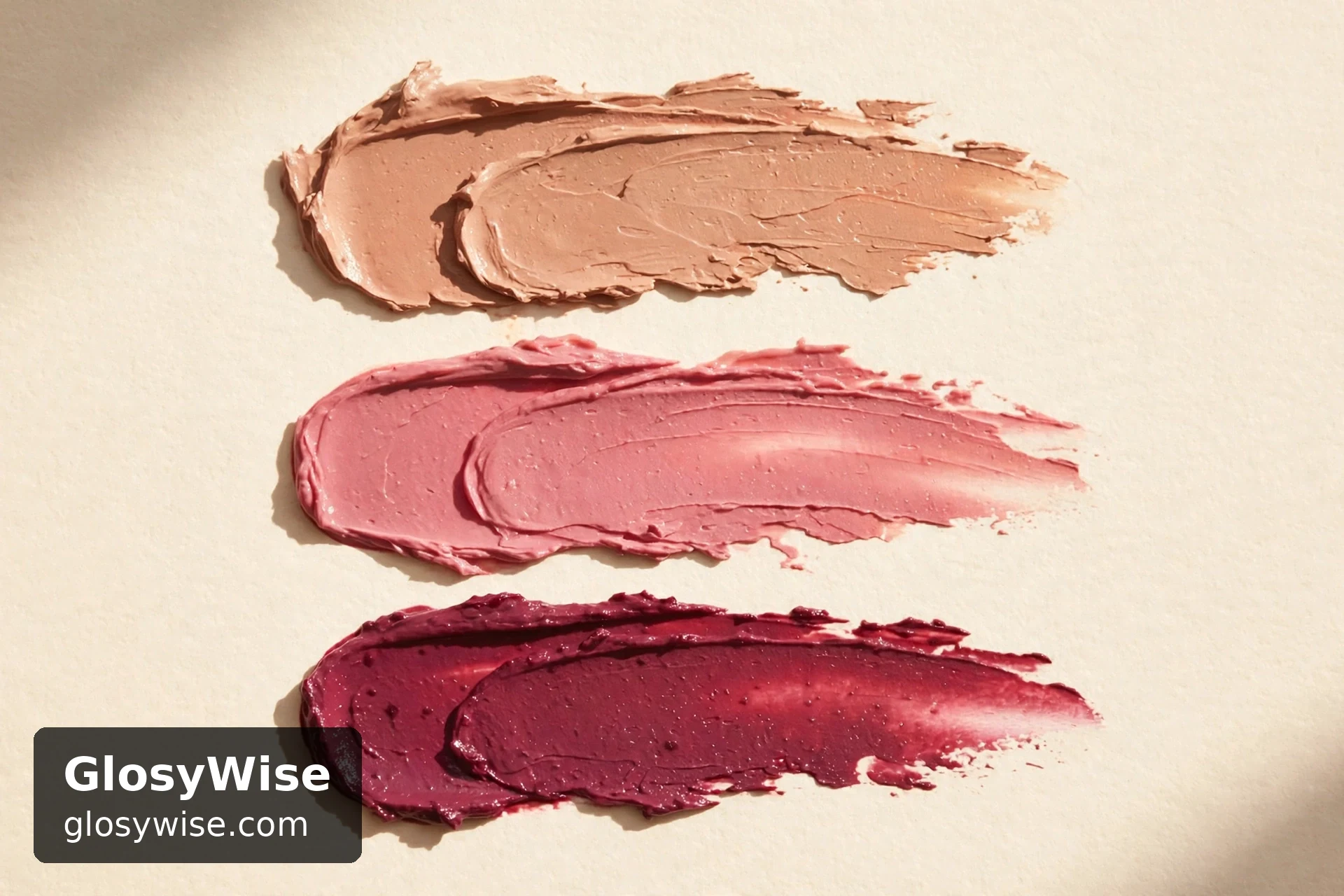
A natural lip colour is one or two shades deeper than your bare lips. That is the whole secret. Find your undertone first, pick a shade from the family that matches it, and choose a sheer or satin finish. The result is what makeup lovers call MLBB — “my lips but better” — and all you need is one shade, a lip balm, and five minutes to test it. One small step like this can make a whole outfit look finished — it is one of the easiest ways to look put-together every day.
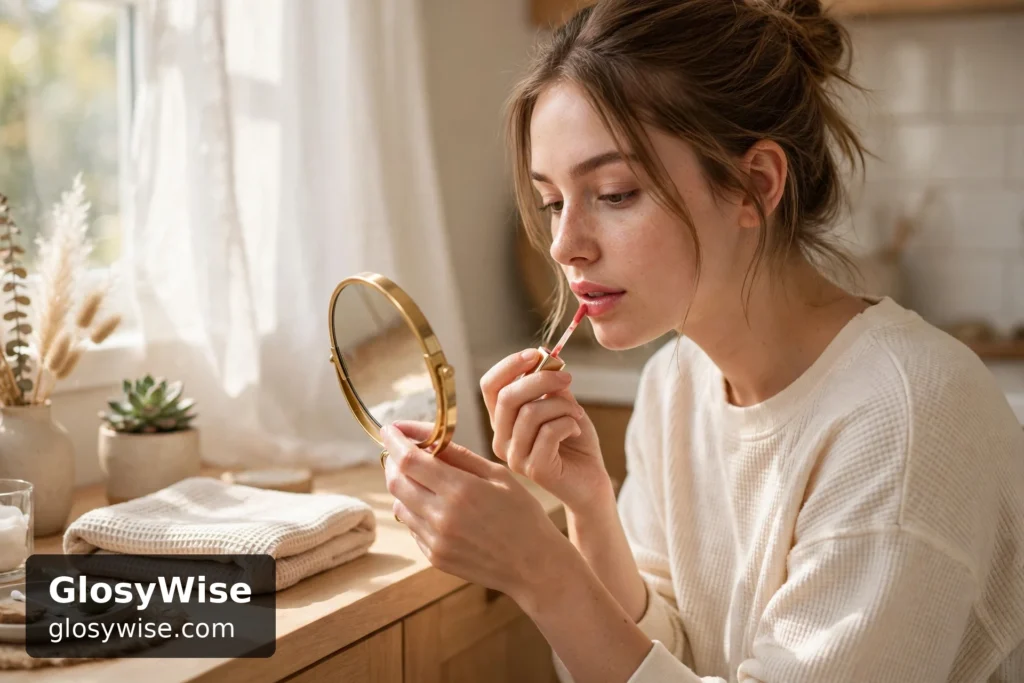
Find your undertone in 2 minutes
Your undertone is the warm, cool or neutral hue under your skin’s surface. It does not change when you tan, and it matters more than your skin tone. A shade that matches it looks like it belongs on you; one that fights it can look wrong.
Three quick checks in daylight will tell you. Veins: blue or purple veins on your wrist point to cool, green or olive to warm, a mix to neutral. Jewellery: gold that makes your skin glow means warm, silver that looks brighter means cool, both looking good means neutral. White vs cream: rosy skin next to white fabric means cool, golden skin means warm, balanced skin means neutral. No single check is perfect, so go with the answer that comes up most often.
The shade families: nude, rose, berry, peach
Natural lip colours fall into four families, and each one suits every skin tone — the difference is how light or deep you go, and warm or cool the version is.
| Family | Cool undertone | Warm undertone | Neutral undertone |
|---|---|---|---|
| Nude | Pink-beige, mauve | Warm caramel, rose-brown | Most nudes — pick by depth |
| Rose | Blue-based rose | Warm rose, coral | Almost any rose |
| Berry | Raspberry, plum | Warm cranberry | Muted berry, plum |
| Peach | Pink-based peach only | Peach, coral, apricot | Soft coral |
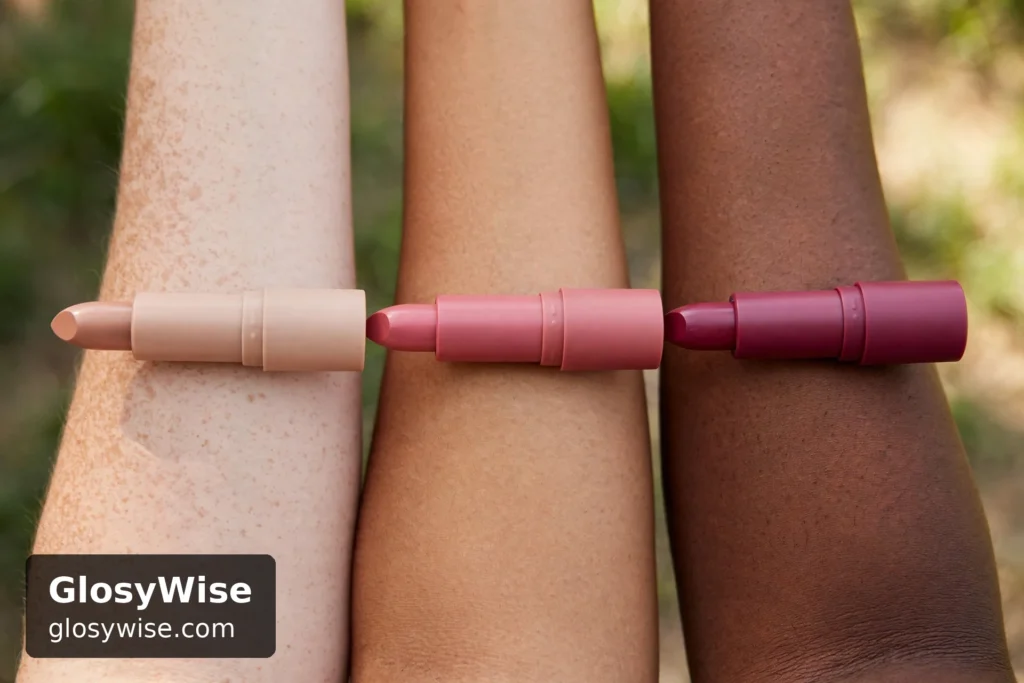
For depth: fair skin suits soft pinks, rosy nudes and sheer berries — avoid pale beige nudes, which wash you out. Medium skin carries warm caramel nudes and classic berries best. Deep skin looks great in rich brown-nudes and deep berries; a nude lighter than your lips looks chalky. Not sure? Start with rose — it suits most undertones and is hard to get wrong.
What is MLBB lipstick?
MLBB stands for “my lips but better” — not a brand or a single shade, but a way of choosing lip colour: your natural lip colour, turned up slightly. To find yours, look at your bare lips in daylight, note their colour — rosy, mauve, brownish or deep berry — then look for a lipstick one or two shades deeper in the same family. Maybelline’s guide to choosing a lipstick shade by undertone covers the same tests.
How to test a shade before buying
- Swatch on your fingertip, not the back of your hand. Fingertip skin is closer in colour and texture to your lips; the back of your hand is lighter, so shades look different there.
- Test on your lips if you can, using a disposable applicator or a clean cotton bud. If you cannot, the fingertip is your next best option.
- Check it in daylight. Shop lighting is warm and flattering — a shade that looks perfect in the shop can look orange or grey outside.
- Wait a minute. Some lip colours deepen slightly as they settle. Apply, walk around the shop, then check again.
- Test it with your normal face — the makeup you usually wear, or none at all.
Shopping online? Check the shade description for undertone words — “warm,” “cool,” “blue-based,” “peach” — and look for photos of people with a similar skin tone. Reviews that mention skin tone beat the product photo.
How to apply it so it looks natural
Your fingertip is the best tool — no liner or brush needed.
- Prep your lips first. Colour looks patchy on dry lips, so exfoliate gently with a damp cloth, apply lip balm, and let it sink in. Blot off the extra balm first, or the lipstick will slide. Our simple 3-step skincare routine for beginners covers the gentle care that keeps lips and skin in good shape.
- Apply one light layer from the centre outward. A tint or sheer lipstick is the easiest formula for beginners — it is hard to overdo.
- Blot once. Press a tissue gently between your lips to leave a soft stain that looks like your natural colour.
- Blend the edges with your fingertip so there is no hard line. Soft edges are what make lip colour look natural.
- Add liner only if you want definition, choosing one that matches your natural lip colour — not the lipstick.
Make it last
Apply, blot, then apply a second thin layer — two thin layers last longer than one thick one. For extra staying power, hold a tissue over your lips and dust a little translucent powder through it. Carry the one shade and touch up the centre after eating.
5 mistakes to avoid
- Too dark a shade. Three or four steps deeper than your bare lips stops looking natural — stay within one or two shades deeper.
- Ignoring your undertone. A warm coral on cool skin can look wrong even when the depth is right.
- Matte colour on dry lips. Matte shows every flake — if your lips are dry, use a satin or sheer finish and prep with balm first.
- Testing in shop lighting only. Warm shop lights flatter almost every shade. Always check in daylight before you buy.
- Buying a full set before trying one shade. Buy one, wear it for a week, then buy the next.
Conclusion
Learn your undertone, pick a shade one or two steps deeper than your bare lips, and test it on your fingertip in daylight. Start with one rose or nude, applied over balm and blotted once.
Look at your bare lips in daylight — rosy, mauve, brownish or deep berry. Your natural lip colour is a shade one or two steps deeper, in the same family. Check your undertone first so you pick the warm or cool version.
A sheer or satin rose, one or two steps deeper than your bare lips. Rose suits most undertones, is hard to apply badly, and goes with every outfit. A tinted lip balm is the most forgiving first buy.
Your undertone matters more. It does not change with a tan, so match the lip colour’s undertone to yours first, then adjust the depth to your skin tone.
Prep with balm, apply one light layer from the centre outward, blot once, and blend the edges with your fingertip. A sheer or satin finish looks more natural than a heavy matte.
MLBB means “my lips but better” — a shade like your natural lip colour, turned up slightly. It is not one shade or brand.
Leave a Reply