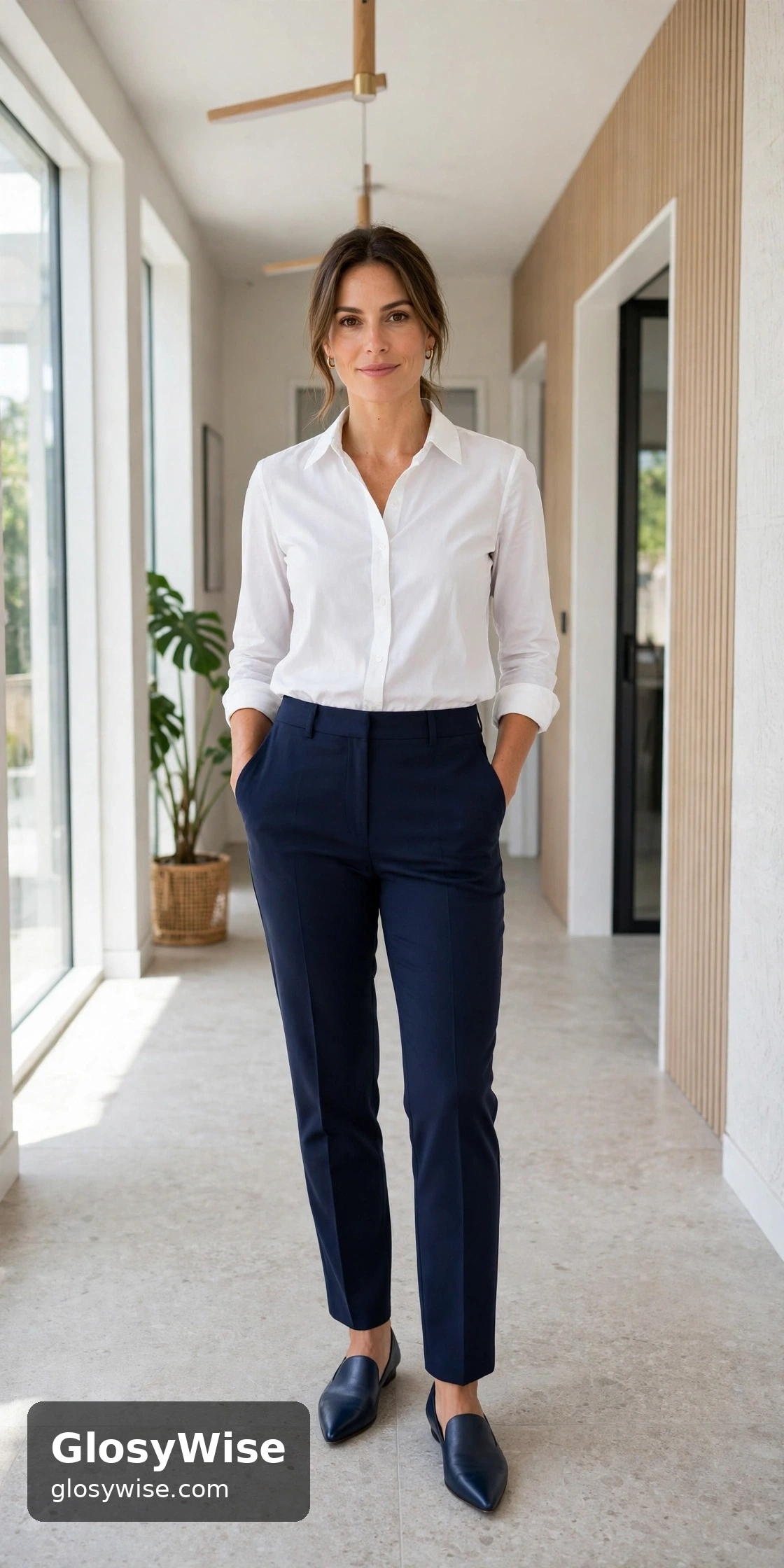
Looking put-together is a skill, not a shopping budget
You have probably seen people who always look tidy and styled, even in a simple T-shirt and jeans. It is easy to assume they spent hours choosing an outfit or bought expensive clothes. Most of the time, that is not what happened. They were simply doing a few small things well.
This guide shows you how. You will learn 10 simple ways to look put-together every day that work with the clothes you already own. There is no need to buy a whole new wardrobe. Start with the fit, keep your colours simple, and add one or two easy finishing touches — the rest is practice.
Try it: use our interactive Sunglasses Face-Shape Finder — answer 3 quick questions and find out which sunglass frames suit your face best.
10 easy ways to look put-together every day
1. Get the fit right first
Most outfits look put-together because they fit well — not because the clothes are expensive. A well-fitting T-shirt, pair of jeans or blazer flatters your shape and looks intentional. Clothes that are too tight or too loose usually look unfinished, even if they are new.
Before you buy something new, check what you already own for fit:
- Shoulder seams should sit at the edge of your shoulder, not halfway down your arm.
- Tops and trousers should skim your body — not pull, gape or drag.
- Try sitting down in trousers and skirts. If they cut in or ride up, the size or the cut is wrong.
If something is almost right, a small alteration can save it. Shortening hems, taking in a waist, or fixing a sleeve is often cheaper than buying a replacement — and it makes the piece feel made for you.
2. Build a small base of neutrals that mix together
Most easy outfits start with colours that go with everything: white, black, beige, grey, navy and denim blue. When your basics are in these colours, almost any top matches almost any bottom, so you get many more outfits from fewer clothes.
A small capsule base — a white shirt, a trench or a blazer, a denim jacket, black trousers, jeans and folded knits — mixes into dozens of outfits.
A useful starter base is:
- Two plain T-shirts (white and black) and one white shirt or blouse
- One pair of straight jeans and one pair of black or navy trousers
- One blazer, cardigan or denim jacket
- One simple dress or skirt you can dress up or down
- White sneakers and one smarter pair of shoes
Once this base works, add colour and prints in small doses — a scarf, a top, or a bag — so your wardrobe stays easy to mix.
3. Use the three-colour rule
If an outfit feels messy, it often has too many competing colours. A simple guide is to keep one outfit to three colours or fewer, including your shoes and bag. For example: white, denim blue and tan. Or black, grey and white.
This does not mean your wardrobe has to be boring. It just means each outfit has a clear plan. Patterns count too — if your top is printed, pick one colour from the print for your bottoms and accessories, and let the print be the focus.
4. Add a third piece to finish the outfit
A top and a bottom are an outfit. A top, a bottom and one extra piece look styled. That third piece can be a blazer, an open shirt over a T-shirt, a cardigan, a denim jacket, a scarf, or a structured bag. The third piece adds shape and intention, and it is the fastest way to make basics look deliberate — especially for work, photos, or going out straight after a casual day.
5. Tuck, roll and adjust — the 30-second fixes
Before you change an outfit, try these small fixes first:
- The front tuck: Tuck just the front centre of a top into your waistband. It shows your waist, makes legs look longer, and still feels relaxed.
- A neat roll: Roll sleeves to just below the elbow and give jeans one neat turn-up. Small, tidy edges look intentional.
- A belt: Add a belt when a dress or trousers look shapeless. It creates a waist in seconds.
These fixes cost nothing, take less than a minute, and are often the difference between “thrown on” and “put together.”
6. Let accessories do the quiet work
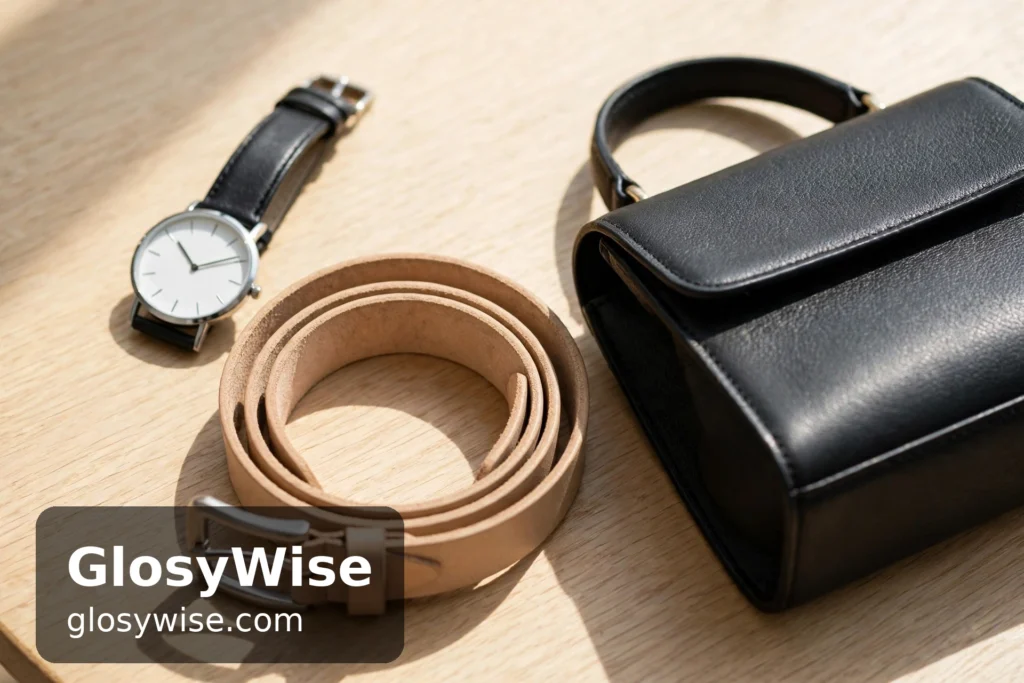
Accessories are the smallest pieces in an outfit, but they change how the whole thing reads. One pair of simple earrings, a watch, or a pair of sunglasses can make a plain outfit look complete.
- Keep a small set you reach for daily: hoop earrings, a belt, sunglasses, a structured bag and clean white sneakers.
- Keep it to two or three accessories at a time. More than that starts to compete.
- Repeat a colour — a tan bag with tan shoes, or gold earrings with a gold belt buckle — to make the outfit feel connected.
- Choose one statement piece, such as a bold bag or earrings, and keep the rest simple.
7. Pay attention to shoes — they set the tone
Shoes tell people how formal an outfit is. The same jeans and shirt look casual with sneakers, smart with loafers or clean flats, and dressed-up with heels or polished boots. Before you change your whole outfit, try changing only your shoes.
Keep your everyday shoes clean, too. Wiped sneakers, brushed shoes and fixed scuffs make a bigger difference than most people expect, because untidy shoes make even a good outfit look unfinished.
8. Balance proportions instead of hiding your shape
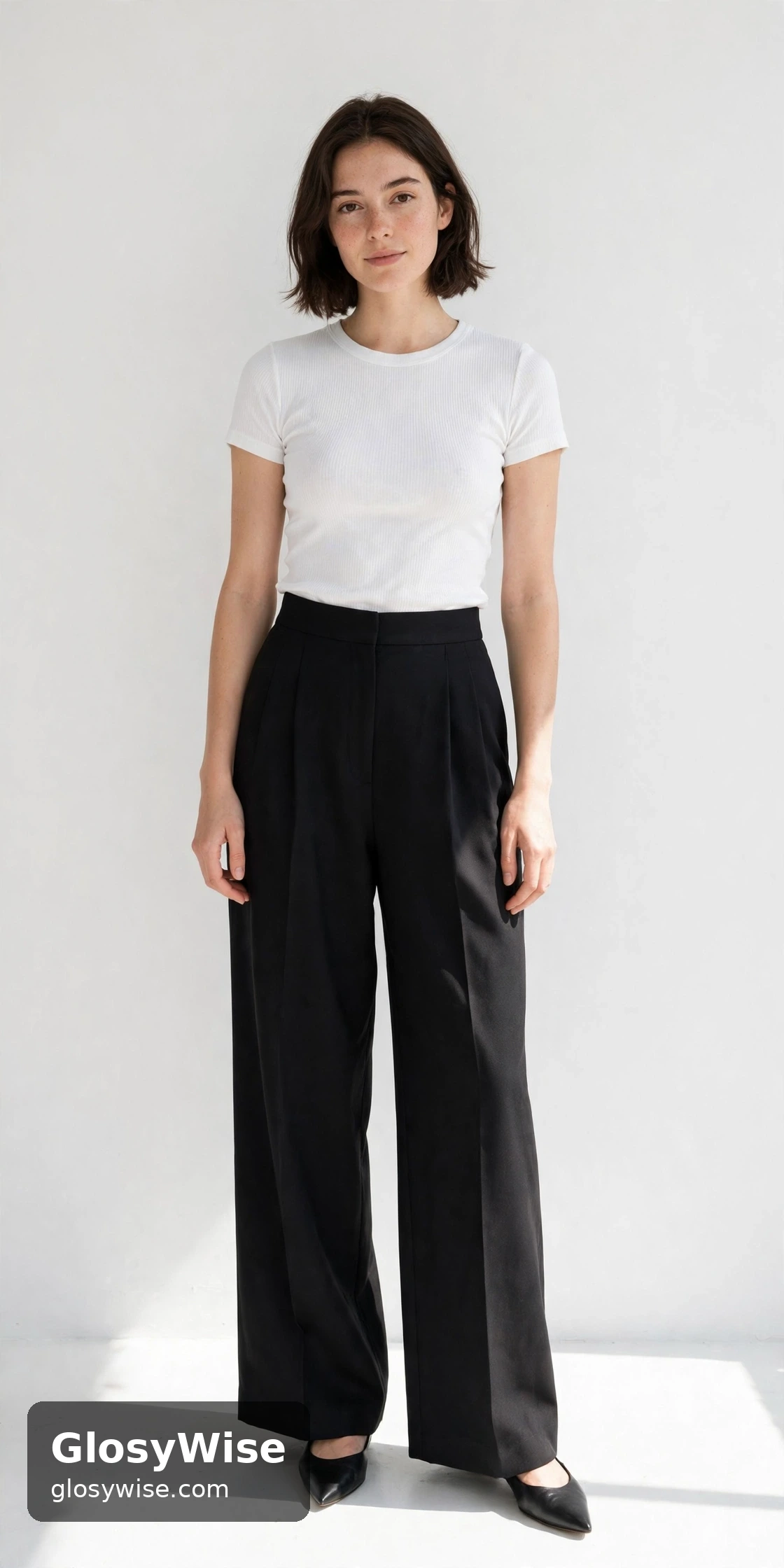
An easy styling balance is loose with fitted: a loose top with straight or slim trousers, or a fitted top with wide-leg trousers or a flowing skirt. Wearing everything loose can look shapeless, and wearing everything tight can feel uncomfortable and look strained.
You do not need to follow this as a strict rule. Use it as a starting point, look in a full-length mirror, and adjust until the outfit feels balanced and comfortable to move in.
9. Steam, lint-roll and care for what you own
Wrinkled, faded or bobbly clothes look tired even when the outfit idea is good. Five minutes of care fixes most of it: hang tomorrow’s outfit up the night before, steam or iron the main creases, use a lint roller on dark clothes, and fold knitwear instead of hanging it so it keeps its shape.
Caring for clothes is also the most budget-friendly styling tip in this list. Pieces last longer, look newer, and you need to replace them less often.
10. Wear it with confidence — and comfort
The final piece of any outfit is how you feel in it. If you are constantly adjusting a top, worried about a hem, or uncomfortable in your shoes, it shows. Choose the version you feel good in, even if it is simpler than the trend you saw online.
Personal style is not copying an influencer exactly. It is learning what fits your body, your day and your taste, then repeating what works. Take a quick photo of outfits you liked — after a month you will see your own pattern, and getting dressed becomes much easier.

Five go-to outfit formulas when you don’t know what to wear
On busy mornings, do not invent an outfit — use a formula. Each one below uses the capsule base from tip 2, so you can swap colours and still stay within the three-colour rule.
| Occasion | Outfit formula | Finish it with |
|---|---|---|
| Everyday casual | Straight jeans + white T-shirt + blazer | White sneakers, hoop earrings |
| Work / smart casual | Black trousers + white shirt + cardigan | Loafers, watch, structured bag |
| Coffee or shopping | Simple dress + denim jacket | Sneakers, sunglasses, crossbody bag |
| Evening out | Black trousers + fitted top + open shirt | Heeled boots, belt, statement earrings |
| Relaxed weekend | Wide-leg trousers + plain tee (front tuck) | Sneakers or sandals, scarf |
Common mistakes that are easy to fix
- Wearing the wrong size: Keeping clothes that do not fit “for later.” They crowd your wardrobe and make mornings harder. Store, alter, donate or sell them instead.
- Too many focal points: A printed top, printed bottoms, bright shoes and a bright bag all at once leave the eye nowhere to rest. Let one piece be the focus.
- Skipping the finishing check: An outfit can be right and still look unfinished if the shirt is creased or the shoes are dirty. The five-minute care routine in tip 9 fixes this.
- Buying trends before basics: Trends are fun in small doses, but a wardrobe built only on trends never quite matches itself. Build the base first, then add one trend piece at a time.
- Thinking style is only for someone else: Style has no single size, age or budget. Fit, colour and confidence work for everyone.
Try it this week: a simple 7-day starter challenge
You do not need to change everything at once. Try one small action a day:
- Lay tomorrow’s outfit out tonight, including shoes and bag.
- Wear a full neutral outfit and add colour only in one accessory.
- Use the front tuck or a belt with your usual jeans outfit.
- Add a third piece — blazer, cardigan, jacket or scarf.
- Clean and lay out the shoes you wear most.
- Repeat an outfit you previously felt good in, and take a photo of it.
- Clear out five items that do not fit or that you never wear.
By the end of the week you will have a photo set of what works, a tidier wardrobe, and a clearer sense of your own style — without buying anything new.
Final thoughts
Looking put-together is not about perfection or spending more. It is about fit, a few colours that work together, a finished outfit, and clothes that are cared for. Pick one tip from this list, use it all week, and then add the next one. Your best outfit is the one that fits your real life, feels comfortable, and makes you walk out of the door without second-guessing yourself. Start there, and your personal style will build itself, one good outfit at a time.
Try it: use our interactive Sunglasses Face-Shape Finder — answer 3 quick questions and find out which sunglass frames suit your face best.
FAQs
Start with fit and care, which cost little or nothing: alter or choose pieces that fit, keep clothes steamed and shoes clean, and build outfits from a small neutral base so everything mixes. Add accessories you already own before buying anything new.
It is a small set of versatile pieces — such as plain tees, jeans, black trousers, a blazer and white sneakers — mostly in neutral colours, chosen because they can be combined into many different outfits.
A helpful beginner guide is three colours or fewer, including shoes and bag. It keeps an outfit looking planned without making it dull.
Add a third piece such as a blazer or denim jacket, do a front tuck, and add one simple accessory. Together these take about a minute and make a basic outfit look intentional.
No. Trends come and go, but fit, proportion, colour balance and confidence always work. Try a trend only when you genuinely like it and it fits with the base you already own.


[…] 10 Easy Ways to Look Put-Together Every Day — your starting point for daily polish with the pieces in this capsule. […]
[…] 10 Easy Ways to Look Put-Together Every Day — a simple routine pairs well with simple daily habits. […]
[…] 10 Easy Ways to Look Put-Together Every Day — simple habits that make any blazer outfit look polished. […]
[…] your bag tidy. Those three habits make a 10-piece wardrobe look more expensive than it is: see our easy ways to look put-together every day for the five-minute […]
[…] A natural lip colour is one or two shades deeper than your bare lips. That is the whole secret. Find your undertone first, pick a shade from the family that matches it, and choose a sheer or satin finish. The result is what makeup lovers call MLBB — “my lips but better” — and all you need is one shade, a lip balm, and five minutes to test it. One small step like this can make a whole outfit look finished — it is one of the easiest ways to look put-together every day. […]
[…] well-chosen ring is one small detail that finishes an outfit — worth getting the size right, even as a […]
[…] Chandler Fashion Center is a shopping mall, so you can combine a film with shopping or a meal. Arrive early if you plan to shop first, because the mall and the theatre can be busy on weekends. For a simple look for a mall and movie outing, see our guide to easy ways to look put together every day. […]
[…] Keep the rest of your jewelry simple. A thin chain collar pairs well with small stud earrings. A thick chain collar can stand alone, so skip a large pendant or heavy earrings. For evening, a rose gold chain collar adds warmth to a plain black dress. In the daytime, a fine chain collar adds polish to a simple top. For more ideas on a simple, put-together look, see our guide to easy ways to look put together every day. […]
[…] smart and take only two minutes. If you want more ideas for a tidy daily look, read our guide to look put together every day. It shows how small steps add up to a polished result. Finally, leave a five-minute buffer in your […]